İznik, Ancient Nicaea
The lakeside town where two councils shaped Christianity and Ottoman kilns perfected the tile — a long day by boat and bus, and worth it.
The short version
- The honest math first: İznik sits across the Sea of Marmara — fast ferry toward Yalova, then a bus skirting the lake, about three hours each way done well; ferry times at ido.com.tr. Start at dawn or make it an overnight; the town fits either.
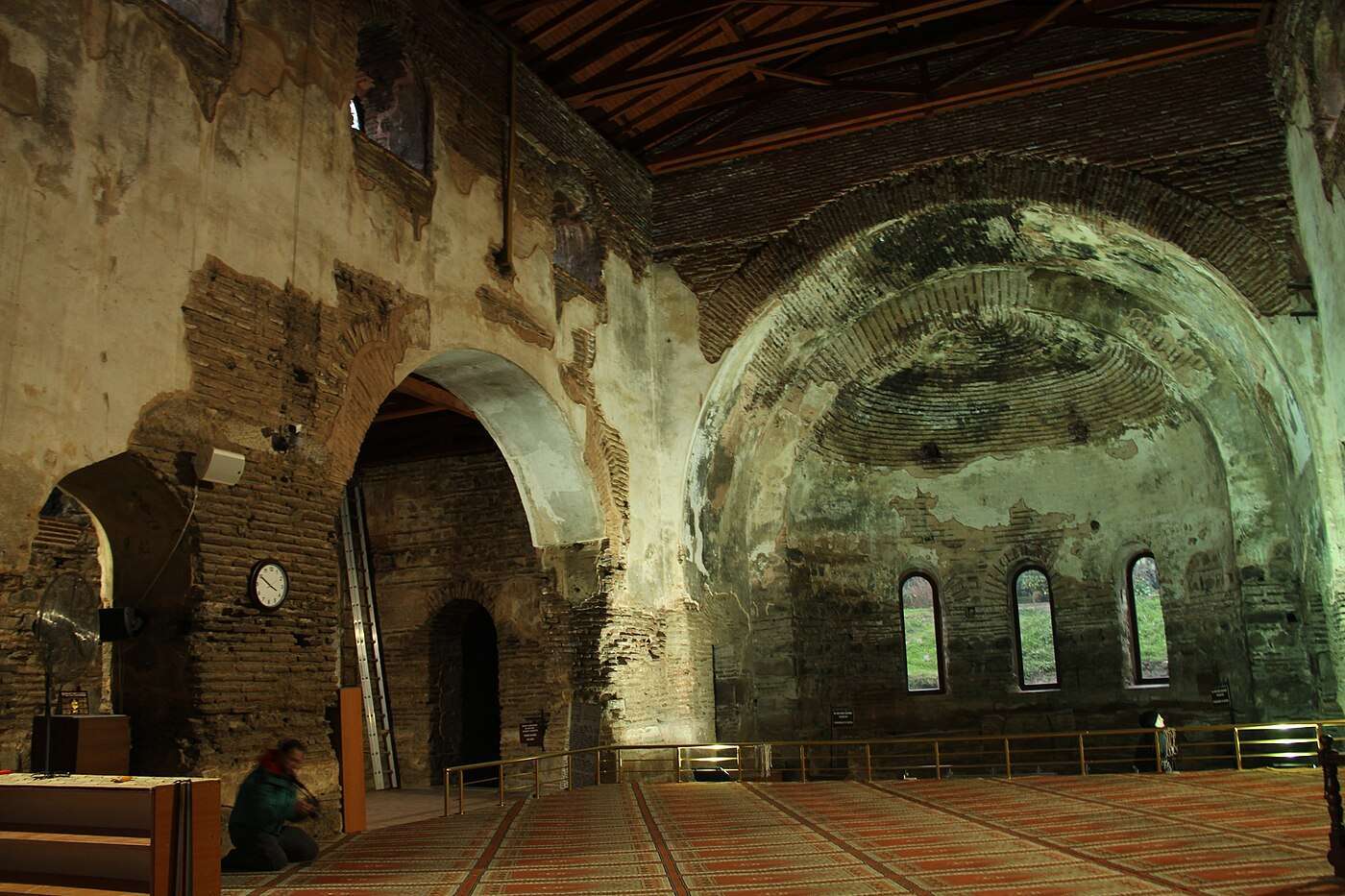
- This was Nicaea. The First Council met here in AD 325 and produced the creed half the world still recites; the Second met in 787 in the Hagia Sophia that still stands at the town’s dead center — church, then mosque, then museum, then mosque again, with the council’s apse intact.
- The 16th-century kilns of İznik made the tiles that sheath Istanbul’s great mosques — coral red and cobalt under glass-clear glaze — and the revived workshops around town still fire the patterns; the İznik name remains the ceramic world’s gold standard.
- The Roman-Byzantine walls still ring the town for nearly five kilometres, pierced by the Istanbul and Lefke gates — walk or cycle the circuit and the fourth century keeps you company the whole way.
- The lake forgives the journey: waterfront fish restaurants, a swimmable shore, and the submerged ruins of a basilica — visible from the air in 2014 and now marked offshore — where the town keeps its newest old discovery; background at goturkiye.com.
Getting there
Fast ferries cross from Istanbul toward Yalova through the day; from Yalova’s terminal, buses and dolmuş run the lakeshore hour to İznik. Door to door is about three hours each way when the connection cooperates — which is why the day starts at dawn and why tours bundle the logistics for a premium. Drivers can round the lake in about 2.5 hours with the Osmangazi bridge. In town, everything inside the walls is walkable; bikes rent cheaply for the wall circuit.
The day
Walk straight to the Hagia Sophia at the crossroads — small, layered, and heavy with what happened in it: the 787 council sat here, and the building has been praying in two religions ever since. Loop the Istanbul Gate’s triple arches, then the tile workshops along the main streets — watch a quartz-white blank take cobalt before lunch. Eat fish on the lakefront with the basilica marker offshore. The afternoon takes the walls by bike or the Lefke Gate stretch on foot, the small museum if open, and baklava before the bus. The ride back across the Marmara at dusk settles the argument about whether it was worth it.
When to go
April through June and September through October — ferry weather, walkable walls, and the lake at its best color. July and August add heat the walls do not shade. Winter shortens the daylight the connection math depends on; this is a long-light trip by design. Olive harvest in late autumn gives the lakeshore its working face.
Frequently Asked Questions
How do you get from Istanbul to İznik?
Fast ferry toward Yalova, then a bus or dolmuş along the lake — about three hours each way. A dawn start makes the day comfortable; tours and drivers compress the logistics for a price.
Why is İznik historically important?
As Nicaea it hosted the First Council of 325 — source of the Nicene Creed — and the Second of 787, held in the Hagia Sophia still standing at the town center. Few small towns anywhere carry more doctrinal history per square metre.
What makes İznik tiles special?
The 16th-century kilns achieved colors — coral red above all — and glaze clarity that nobody has fully reproduced since; Istanbul’s imperial mosques are dressed in them. Modern workshops in town revive the craft and sell it.
Can you see the sunken basilica?
From shore you see the marked site; the submerged ruins — a 4th-century basilica found in 2014 — show best from above and in the town’s visitor materials. The lakefront walk passes it regardless.
Is İznik doable as a day trip, honestly?
Yes, with a dawn start and the connections respected — roughly six hours of travel around five in town. The overnight version swaps the scramble for lakeside dinner and the walls at golden hour.