Bursa Across the Marmara
Three hours each way is the honest arithmetic — ferry to Mudanya plus bus is the pleasant version — to the first Ottoman capital: twenty domes, green tiles, a silk courtyard, and a kebap eaten where it was invented.
The short version
- The pleasant route per the alarm runs the fast ferry across the Marmara to Mudanya (about an hour and three quarters on the standing schedules, operators including BUDO at budo.burulas.com.tr) plus the connecting bus into Bursa — with direct intercity buses over the Osmangazi bridge as the road alternative; either way the door-to-door math runs 2.5–3 hours.
- Bursa was the Ottoman state’s first capital — taken in 1326, seat of the early sultans, and holder of the dynasty’s founding tombs — with the early-Ottoman ensemble now UNESCO-listed alongside the village of Cumalıkızık.
- The Ulu Camii — the Grand Mosque — carries its twenty domes over a forest of piers, an interior famous for its monumental calligraphy panels and its indoor fountain; entry is free within prayer-time courtesies and the modest dress the register assumes.
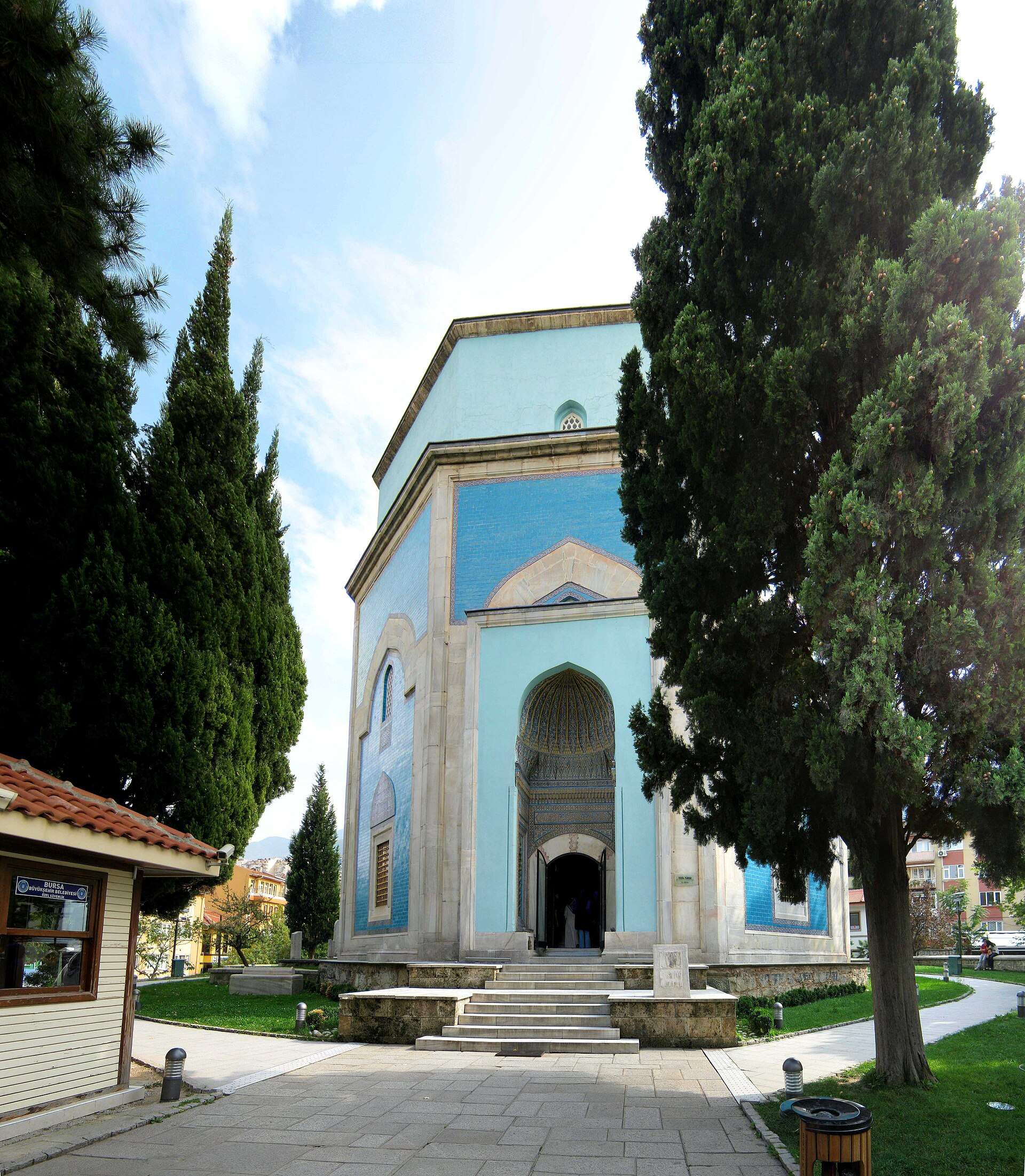
- The Green complex is the tile pilgrimage: the Green Tomb (Yeşil Türbe) of Sultan Mehmed I sheathed in the blue-green faience that named it, and the Green Mosque across the lane with its İznik-tradition interior — the early-Ottoman aesthetic at its concentrated best.
- Koza Han — the cocoon caravanserai of 1491 — anchors the silk story: the courtyard’s plane-tree tea service, silk shops ringing two arcaded floors, and five centuries of the trade that dressed the empire; the surrounding covered bazaar runs the fuller market sprawl.
- The eating and altitude registers per the alarm: İskender kebap was invented here in the 19th century — the historic houses serve it with the tableside butter pour as ceremony — and the Uludıağ teleferik climbs the mountain on one of the world’s longest cable-car runs at roughly nine kilometers, a clear-day-only ticket by the alarm’s own rule.

Getting there
The alarm’s early boat is the architecture: the first Mudanya ferry buys the five-hour town window, and the connecting buses meet the sailings as designed. The bridge-road buses run more departures at similar door-to-door times with less charm — the Marmara crossing is the version that starts the day rather than merely delivering it. Photograph both return schedules (boat and bus) on arrival per the standing habit; the last pleasant connection home leaves earlier than the last possible one.
The day
Ulu Camii first in the morning quiet: the domes’ grid, the calligraphy at billboard scale, the fountain’s sound doing the interior’s acoustics — taken at the courtesy register mosque visits assume. Walk into the bazaar sprawl to Koza Han: tea under the plane tree, the silk floors browsed with tolerance for persistence, and the courtyard’s five centuries worn lightly. The İskender lunch lands at one of the historic houses per the alarm — the plate arrives, the butter arrives separately and theatrically, and the argument for provenance settles itself. The afternoon climbs to the Green complex: the Türbe’s tiled octagon, the mosque’s interior, and the terrace views back over the plain. The Uludıağ teleferik takes the remaining hours only on the alarm’s clear-summit terms — the ride is the attraction, the top station’s season decides the rest. The ferry home crosses the Marmara against the sunset when the early-boat discipline held.
When to go
April through June and September through November run the town at walking temperature with the mountain’s visibility at its most cooperative. Summer works on mosque-courtyard shade and earlier starts; winter turns Uludıağ into Turkey’s ski season — the teleferik busy with a different crowd — while the town’s covered bazaar and thermal-bath tradition (the old hamams run the mineral springs the city was founded around) carry the street-level day. Ramadan and religious holidays reshape hours and crowds with their own rhythms, noted respectfully and planned around.
Frequently Asked Questions
Ferry or bus, really?
Ferry-plus-bus for the crossing’s pleasure and a genuine sense of arrival; the bridge buses for frequency and single-seat simplicity. Times land close enough that the alarm calls it on charm. Prone-to-seasickness travelers note the Marmara’s moods; everyone else takes the deck seats going home.
What’s special about İskender here?
The dish — döner over pide with tomato sauce and yogurt, finished with browned butter poured at the table — was created in Bursa by İskender Efendi in the 1860s, and the founding family’s houses still serve the canonical version. Eating it at source is the whole point per the alarm; the butter pour is not optional and nobody asks.
Is the Grand Mosque open to non-Muslim visitors?
Yes, outside prayer times and within the usual courtesies — modest dress, shoes off, quiet voices, and headscarves for women per the posted norms. The interior’s calligraphy and fountain justify the small logistics. Friday middays belong to the congregation; plan around them.
Is the cable car worth it if the summit is cloudy?
No — which is why the alarm makes clarity the condition. The ride’s nine kilometers deliver forest, cliffs, and the Marmara’s spread only when the weather permits; a clouded summit refunds nothing and shows less. Check the mountain from town: if you can see the top, the ticket makes sense.
Bursa or the Princes’ Islands from Istanbul?
The Islands (documented on this network) for the short car-free ferry classic; Bursa for a full Ottoman capital at long-day range. One is an afternoon’s escape, the other a committed day per the alarm’s arithmetic — and the Marmara crossing is the shared pleasure that makes either version of the sea day work.